Investment is learning for economy
I’ve been working as a freelance web and graphic designer since 2016, and thanks to my clients, I’ve been able to build my career in Canada for the past 10 years. While my main focus has always been branding and UX design, I recently discovered a new interest through podcasts—investing.
I’ve never been drawn to gambling or sports betting; that kind of risk doesn’t fit my personality. But in Canada, everyone has the opportunity to grow their savings through options like a TFSA. I first heard about it from a bank advisor before COVID, but at the time, I didn’t think I was qualified to start investing for the future.
Now, I see investment differently. It’s more than just money—it’s a way of learning how the economy works and how to secure long-term stability. As a designer, I know that building creative skills is one form of investment. But I’ve also realized that financial investment is just as important. By exploring stocks, savings plans, and other opportunities, I’m learning how to grow beyond design projects and build a stronger foundation for the future.
Basics of Investing in Canada
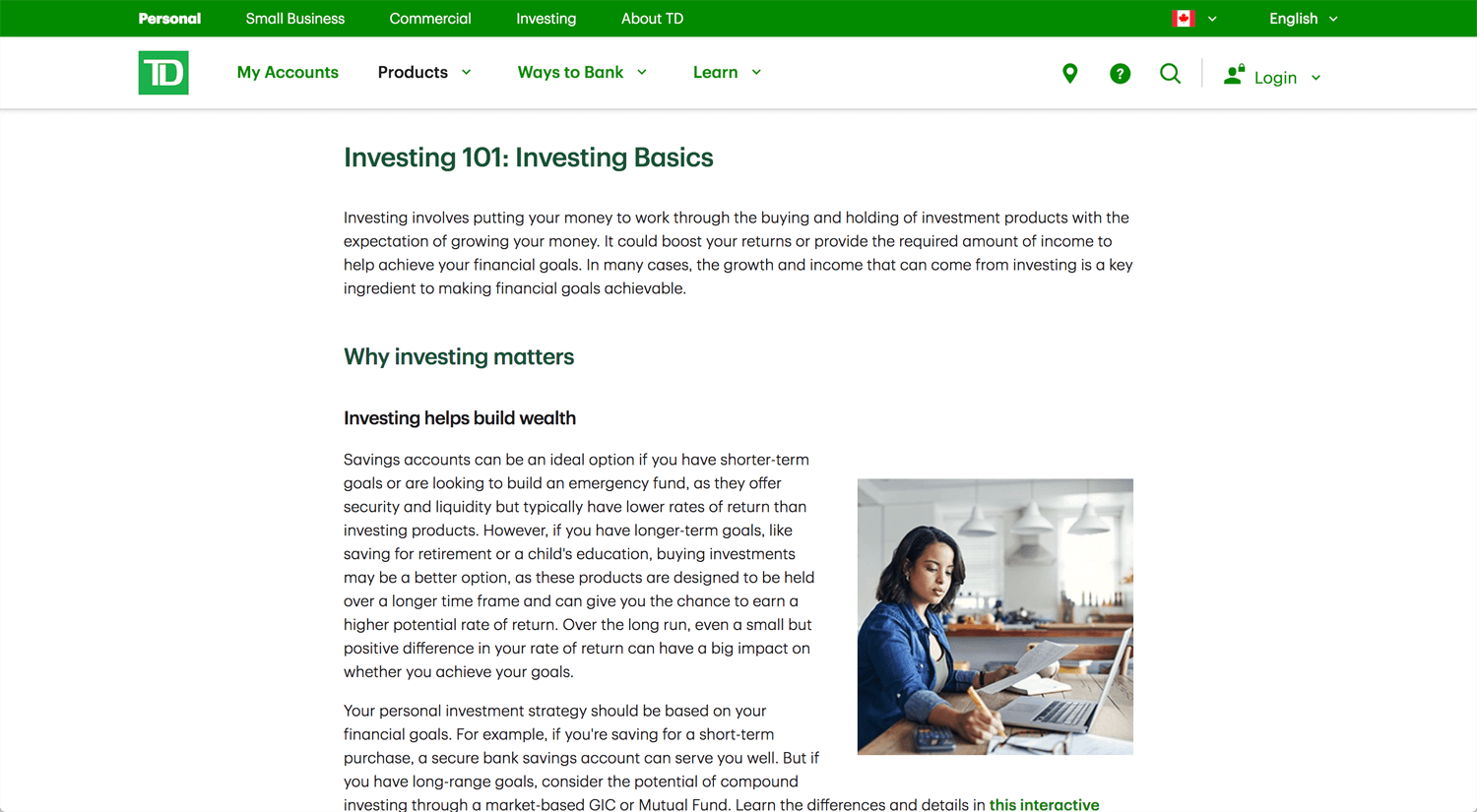
Before exploring specific tools like the TFSA, it helps to understand the fundamentals of investing in Canada. Investing is simply the process of putting your money to work so it can grow over time. Instead of leaving cash in a regular savings account where it earns very little interest, investing allows your money to generate returns through different assets.
Common Types of Investments in Canada
- Cash & GICs (Guaranteed Investment Certificates): Low risk, but low returns. Your money is safe but grows slowly.
- Stocks: Buying shares in companies. Higher potential growth, but also higher risk.
- Bonds: Lending money to governments or corporations in exchange for fixed interest. Lower risk than stocks.
- Mutual Funds & ETFs: Bundled investments that give you exposure to many companies at once, making it easier to diversify.
Why Investing Matters
- Keeps up with inflation: Cash loses value over time, but investments can outpace rising costs.
- Builds long-term wealth: Even small amounts, invested regularly, can grow significantly over years.
- Financial security: Investing creates a safety net and helps prepare for retirement or major life goals.
In Canada, the government offers tax-advantaged accounts like the TFSA (Tax-Free Savings Account) and the RRSP (Registered Retirement Savings Plan) to encourage people to invest. These accounts make a big difference in how much of your growth you get to keep.
What is a TFSA (Tax-Free Savings Account)?
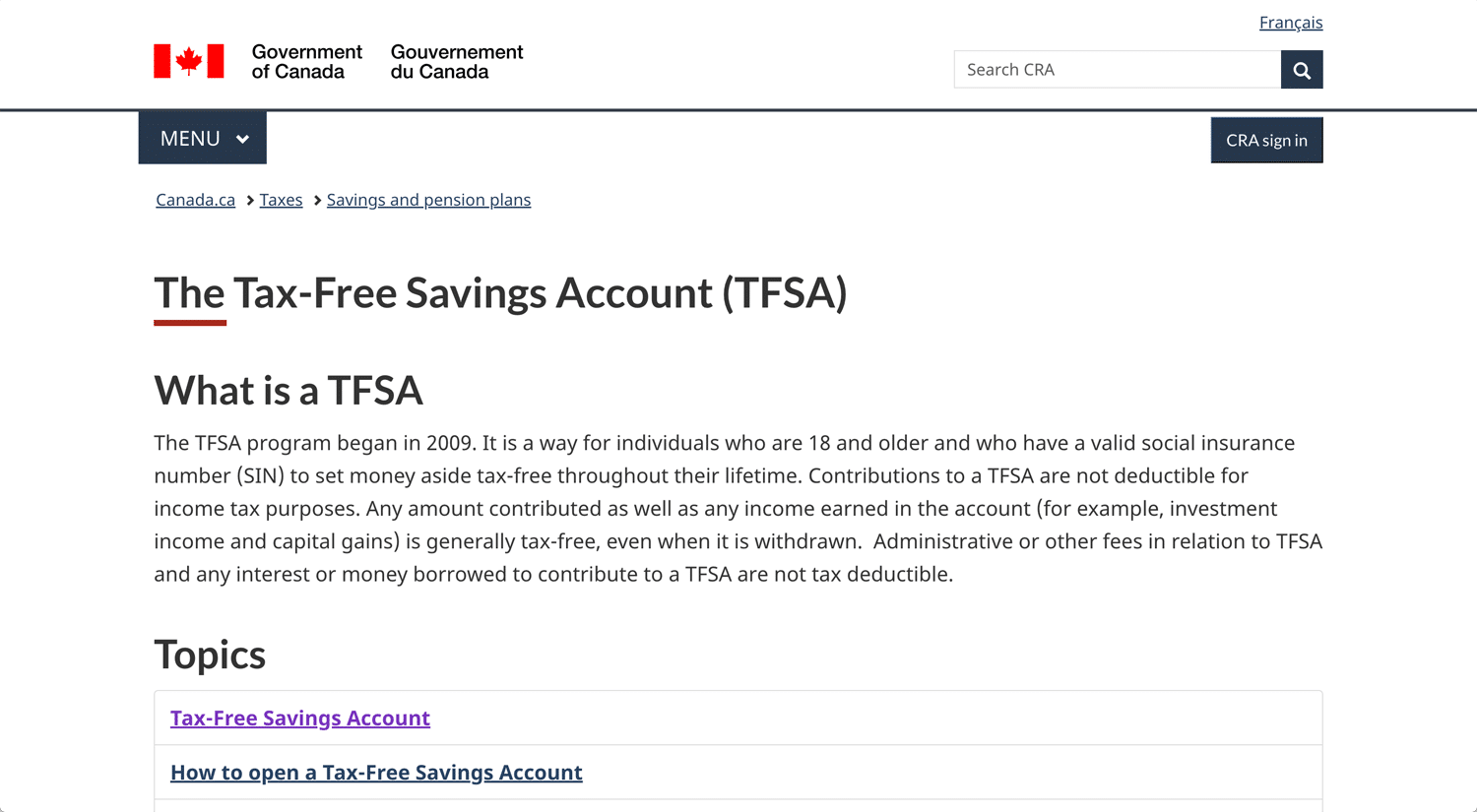
A Tax-Free Savings Account (TFSA) is a special type of account available to Canadians that lets you grow your money without paying tax on the investment gains. You can put money into a TFSA and use it to hold different types of investments such as:
- Cash (just like a savings account)
- Guaranteed Investment Certificates (GICs)
- Stocks
- Bonds
- Mutual funds or ETFs
The biggest benefit is that any growth—whether it’s interest, dividends, or capital gains—is completely tax-free, even when you take the money out. This makes it one of the most flexible and powerful tools for saving and investing in Canada.
Key Points to Know:
- Contribution limit: Each year, the government sets a maximum amount you can put into your TFSA (in 2025, it’s $7,000). If you don’t use it, the unused room carries forward.
- Withdraw anytime: Unlike RRSPs, you can take money out of your TFSA at any time, for any reason, without penalty.
- Contribution room returns: If you withdraw money, you get that room back the following year.
- Eligibility: You must be at least 18 years old and have a valid SIN (Social Insurance Number).
TFSA contributions
| Year | Limit |
|---|---|
| 2009 | $ 5,000 |
| 2010 | $ 5,000 |
| 2011 | $ 5,000 |
| 2012 | $ 5,000 |
| 2013 | $ 5,500 |
| 2014 | $ 5,500 |
| 2015 | $10,000 |
| 2016 | $ 5,500 |
| 2017 | $ 5,500 |
| 2018 | $ 5,500 |
| 2019 | $ 6,000 |
| 2020 | $ 6,000 |
| 2021 | $ 6,000 |
| 2022 | $ 6,000 |
| 2023 | $ 6,500 |
| 2024 | $ 7,000 |
| 2025 | $ 7,000 |
| 2026 | $ 7,000 |
| Total | $109,000 |
*Only contributions made under a valid SIN are accepted as TFSA contributions.
Types of TFSA in Canada
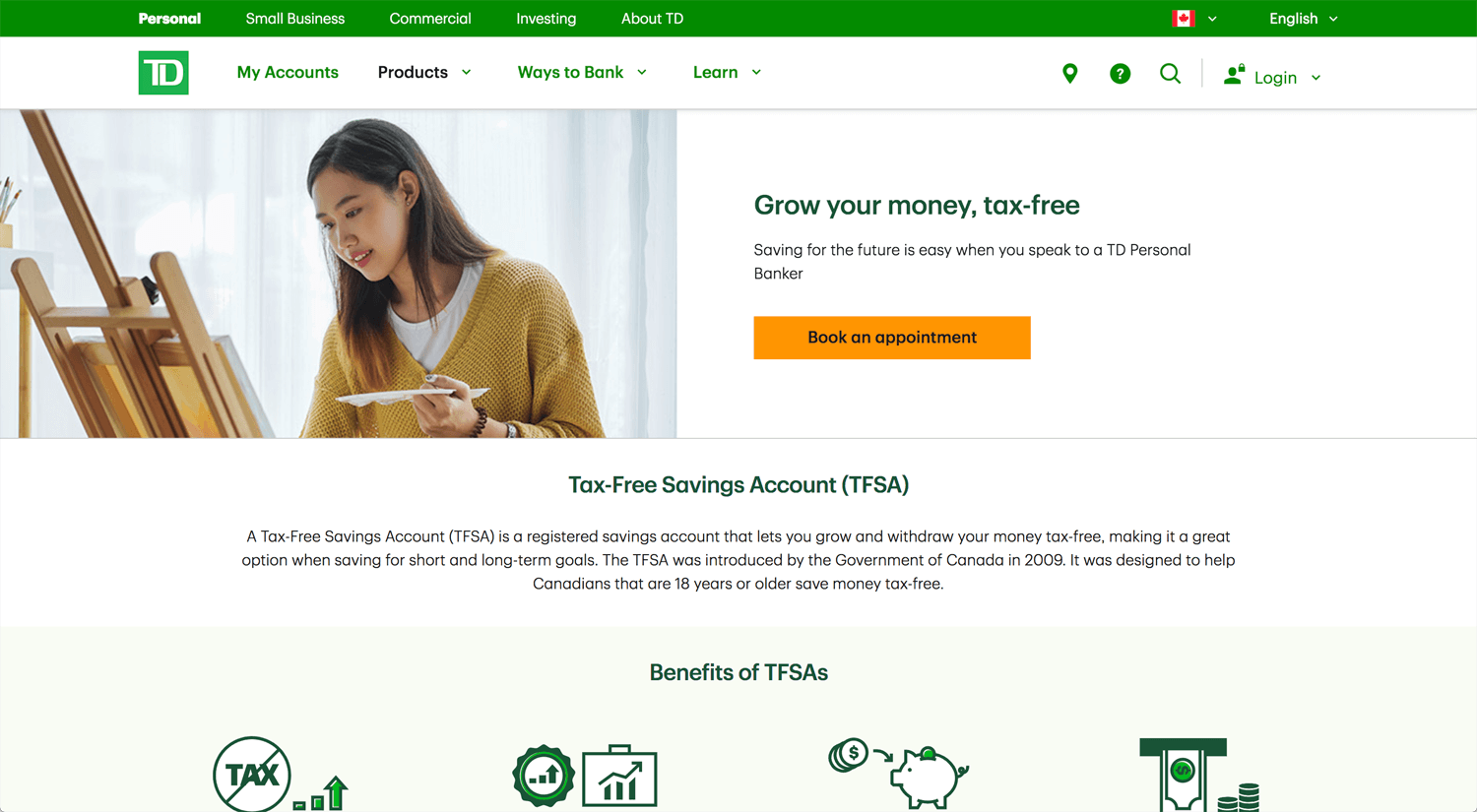
A TFSA isn’t just a savings account—it’s a container where you can hold different types of investments. Depending on the financial institution, you can open one or more of these TFSA types:
1. TFSA Savings Account
- Works like a regular bank savings account, but interest earned is tax-free.
- Interest rate: Usually around 3–5% per year (varies by bank).
- Very safe, ideal for short-term goals or emergency funds.
2. TFSA GIC (Guaranteed Investment Certificate)
- You deposit money for a fixed period (e.g., 1–5 years) and earn guaranteed interest.
- Interest rate: Typically 4–6% annually, depending on term length and bank.
- Very low risk and predictable returns, good for conservative savers.
3. Self-Directed TFSA
- Lets you buy and hold investments like stocks, ETFs, mutual funds, and bonds.
- Potential returns: Highly variable; historically, the stock market averages 6–8% per year, but can fluctuate.
- Higher potential growth, but also higher risk.
- Best for investors willing to actively manage their portfolio.
4. TFSA Mutual Fund Account
- Your money is pooled with other investors and professionally managed.
- Potential returns: Usually 4–7% per year depending on fund type.
- Provides diversification but comes with management fees.
- Suitable for those who want growth but don’t want to pick individual stocks.
5. TFSA Robo-Advisor Account
- Online platforms (like Wealthsimple, Questrade, etc.) that invest your money automatically in ETFs.
- Potential returns: Similar to ETFs, around 5–7% per year historically.
- Low fees, diversified portfolios, easy to use.
- Great option for beginners seeking long-term growth without actively managing investments.
*Tip for beginners: Even modest returns can compound significantly over time. For example, a $10,000 TFSA earning 5% annually could grow to around $16,300 in 10 years, all tax-free.
Self-Directed TFSA: Take Control of Your Investments
A Self-Directed TFSA lets you actively manage your own investments, giving you full control over what goes inside your account. You can hold stocks, ETFs, bonds, and mutual funds, allowing for higher potential growth compared to a simple savings account or GIC.
Canadian Stocks
- Buy shares of Canadian companies like Shopify, Royal Bank, or Enbridge.
- Potential for long-term growth and dividends.
U.S. Stocks (via Canadian broker)
- Access companies like Apple, Tesla, or Amazon.
- Currency fluctuations may affect returns, but potential growth is high.
Exchange-Traded Funds (ETFs)
- Bundles of stocks or bonds, often tracking an index like the S&P/TSX Composite.
- Lower risk than picking individual stocks; good for diversification.
Mutual Funds
- Professionally managed pools of investments.
- Suitable if you want growth without actively picking stocks.
Bonds
- Government or corporate bonds provide fixed interest income.
- Lower risk, steady returns.
REITs (Real Estate Investment Trusts)
- Invest in real estate properties without owning them directly.
- Can provide rental income and growth potential.
Dividend-Paying Stocks
- Stocks that pay regular dividends.
- Reinvesting dividends inside your TFSA helps compound growth faster.
While the potential returns are higher—historically around 6–8% per year—so is the risk, since market values can fluctuate. This type of TFSA is ideal for freelancers or creatives who want to take a hands-on approach to growing their wealth, make strategic investment choices, and build a long-term portfolio tailored to their goals.
*Tip for beginners: Even modest returns can compound significantly over time. For example, a $10,000 TFSA earning 5% annually could grow to around $16,300 in 10 years, all tax-free.
Action Plan: How to Start Investing as a Web & Graphic Designer in Canada
Starting your investment journey doesn’t have to be complicated. Here’s a simple action plan tailored for freelancers like you:
1. Set Your Goals
- Decide why you want to invest: retirement, buying a home, emergency fund, or growing wealth.
- Define your timeline: short-term (1–3 years) vs. long-term (10+ years).
2. Check Your Eligibility and Contribution Room
- Make sure you’re 18+ and have a SIN.
- Check your TFSA contribution room on CRA My Account to avoid overcontributing.
3. Choose Your TFSA Type
- Savings Account: Safe, low-risk, short-term goals.
- GIC: Low-risk, predictable returns.
- Self-Directed TFSA / Mutual Funds / Robo-Advisors: Higher growth potential, suitable for long-term goals.
4. Start Small, Invest Regularly
- You don’t need to max out your TFSA immediately.
- Even $100–$500 per month adds up over time thanks to compounding.
- Consider automatic monthly contributions to stay consistent.
5. Diversify Your Investments
- Don’t put all your money in one stock or fund.
- Spread investments across cash, ETFs, bonds, and stocks to reduce risk.
6. Monitor and Adjust Your Portfolio
- Check your investments periodically (quarterly or yearly).
- Adjust allocations as your goals, risk tolerance, or market conditions change.
7. Keep Learning
- Listen to podcasts, read Canadian investment blogs, or take online courses.
- The more you learn, the better decisions you can make.
Conclusion
Investing in Canada isn’t just for the wealthy—it’s for anyone willing to take small, consistent steps toward financial growth. As a freelance web and graphic designer, I’ve learned that building creative skills is one form of investment, but understanding and acting on financial opportunities is just as important.
Starting with a TFSA is a smart way to begin: it’s flexible, tax-free, and allows you to grow your money safely or take calculated risks depending on your goals. By setting clear objectives, choosing the right TFSA type, and contributing regularly, you can build long-term stability while continuing to focus on your creative work.
For freelancers and creatives like me, investing is more than numbers—it’s about designing a future that is secure, flexible, and aligned with your personal and professional goals. The earlier you start, the more time your money has to grow. Take the first step today, and watch both your creative career and financial portfolio flourish.